
How To Build a Personal Brand That’s Unmistakably You
What iconic performances taught me about self-trust, standing out, and the power of being fully yourself.
The other night, I accidentally found myself watching a recap of the most unforgettable moments from the MTV Video Music Awards.
It was essentially millennial catnip.
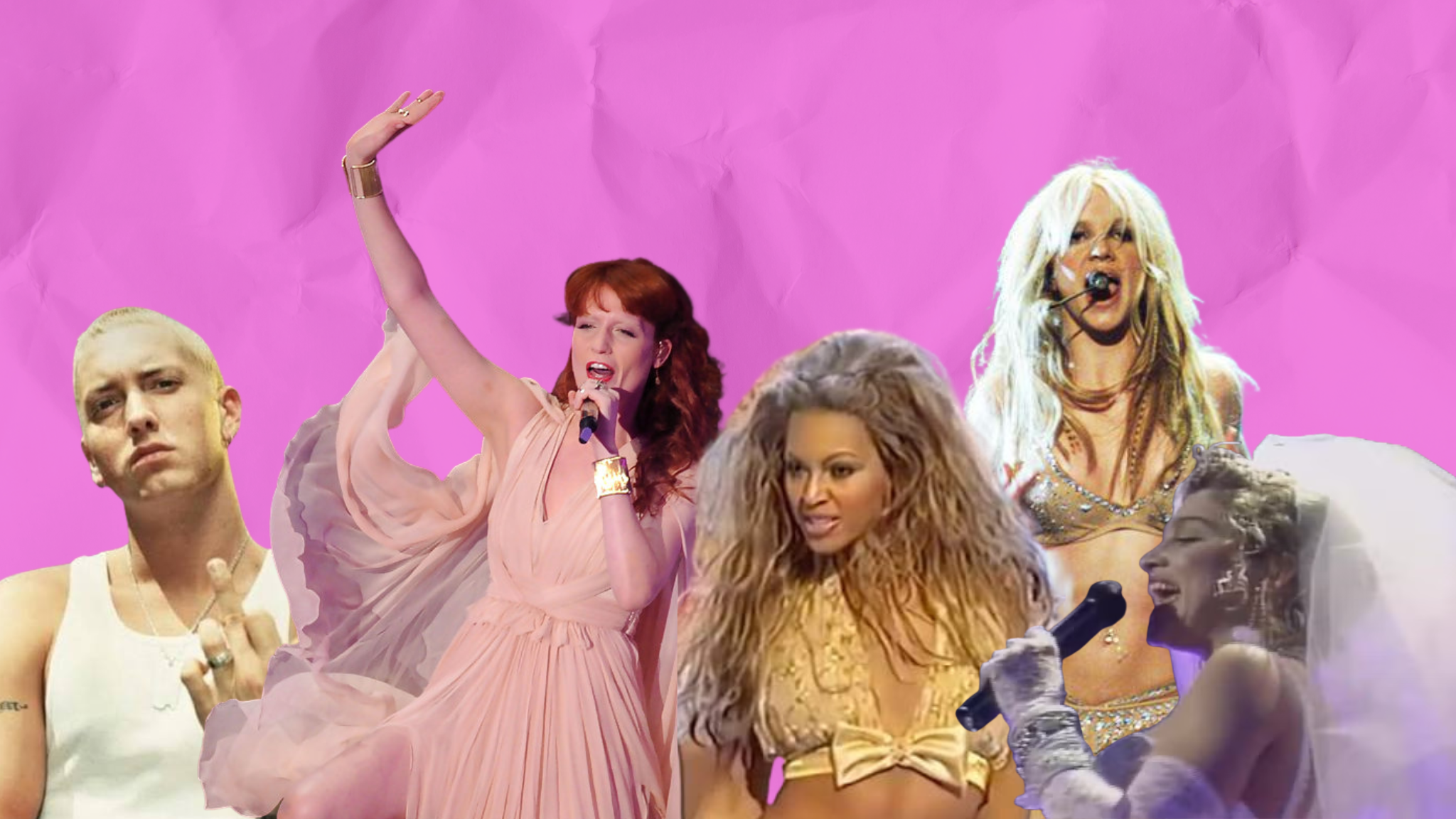
Britney Spears shedding her black suit to reveal that crystal-covered outfit during “Oops!... I Did It Again.” Eminem leading an army of lookalikes into Radio City Music Hall for “The Real Slim Shady.” Beyoncé emerging into her solo era with “Crazy in Love.” Madonna rolling across the stage in a wedding dress during “Like a Virgin.” Florence + the Machine turning “Dog Days Are Over” into something that felt less like a performance and more like a summoning.
I couldn’t look away.
Part of it was nostalgia, obviously. These were the performances we watched before we could replay everything on demand. The moments people talked about at school the next morning. The ones that became cultural landmarks before we had the language of “going viral.”
But that wasn’t the only reason they were so hypnotizing.
Watching them together, I noticed something else: each artist was completely, unmistakably themselves.
They weren’t following the same blueprint or sanding down the boldest parts of themselves to become more palatable. The very thing that made each performance magnetic was how differently that magnetism moved through each person.
For Britney, it was uninhibitedness: sweetness, sex appeal, and a kind of wild abandon existing all at once. For Eminem, it was provocation, satire, and a refusal to behave. For Beyoncé, it was command. For Madonna, it was audacity. For Florence Welch, it was wildness: bare feet, red hair flying, her whole body seemingly overtaken by the song.
There was no single formula for “iconic.”
There was only full expression.
Being yourself takes self-trust before there’s proof
What struck me most was that many of these performances happened at the edge of a becoming.
They weren’t retrospectives performed after the artists had nothing left to prove. They were declarations:
This is who I am.
This is how I see the world.
This is what I came here to make you feel.
Britney’s 2000 performance felt like a public transformation. Beyoncé’s 2003 performance arrived as she was establishing herself as a solo artist. Eminem turned the criticism and absurdity surrounding his image into the concept itself. Florence + the Machine’s 2010 performance introduced the full force of Florence Welch to a much larger American audience.
They were becoming icons in front of us. And to do that, they had to believe in what they were creating before the world had fully reflected that belief back to them.
That’s the part of authenticity we don’t talk about enough.
We speak about “being yourself” as though it’s the safest and easiest option. But being fully yourself, especially before you know whether people will understand it, requires an extraordinary amount of self-trust.
It requires the audacity to say: This is what I see. This is what I believe. This is what wants to come through me. And I’m going to share it before I know exactly how you’ll respond.
You cannot wait for consensus before becoming unmistakable.
Your point of view is the heart of your personal brand
In an archival interview included in the special, Madonna spoke about an artist’s responsibility to have a point of view: to create something that provokes a real response rather than nothing at all.
That stopped me.
Because isn’t that what a personal brand is, at its core?
We’ve made personal branding so complicated. We’ve turned it into content pillars and posting schedules, colour palettes and funnels, hooks and algorithms, and endless rules about what we’re supposed to say.
But your personal brand is your point of view.
It’s the way life looks through your eyes. The meaning you make from what you’ve lived. The connections you notice that someone else might miss. The way you approach your work, your relationships, your ambition, your art.
It’s not only what you know. It’s how you see.
And no one else can see from precisely where you’re standing.
This is why borrowing someone else’s blueprint can only take you so far. You can learn from their strategy, adapt their process, or be inspired by their courage. But you cannot borrow the thing that made it magnetic.
The magnetism was in the person.
You cannot copy your way into being known
There is a cruel irony in trying to become known by making yourself look more like someone who is already known.
We watch what works for someone else and assume their expression is the strategy. We borrow their language. We soften our own opinions. We trade the idea that feels a little strange, vulnerable, or difficult to explain for one we think the algorithm will recognize.
And then we wonder why showing up feels flat. Why it feels like work. Why people may consume what we create but don’t necessarily feel us in it.
The artists in those old performances weren’t magnetic because they had eliminated the risk of being misunderstood. They were magnetic because they were willing to risk it.
They committed to the world they were creating. And commitment is captivating.
We can feel when someone is asking for permission. We can also feel when someone has decided they no longer need it.
That doesn’t mean ignoring feedback or the people you want to serve. It means advice, strategy, and feedback cannot become louder than your own knowing.
So instead of asking, What did they do that worked, and how can I reproduce it? ask:
What becomes possible when I trust my own perspective that deeply?
Let yourself be seen before you feel ready
There is a particular energy underneath every unforgettable act of self-expression.
It’s the moment your devotion to what is true becomes greater than your desire to be approved of.
Call it courage. Call it conviction. Call it the sacred energy of fuck it.
On an awards-show stage, that might look like tearing away an old image, bringing a hundred lookalikes, or singing barefoot as though your whole body belongs to the song.
In our own lives and businesses, the stage looks different.
It might be publishing the essay before you know how it will be received. Naming the offer that doesn’t fit neatly into an existing category. Sharing the opinion that feels too specific. Building a business that makes sense for your life instead of the one everyone else says you should want.
It might simply be letting yourself be seen before you feel completely ready.
The proof usually comes after the decision. After you choose to trust the thing you can feel but cannot yet validate. After you stop asking your future audience to approve the version of you they haven’t had the chance to meet.
Maybe that’s why those performances still move us decades later. We aren’t only watching talent. We’re watching self-belief become visible.
We’re watching someone stand inside their own perspective so fully that, for a few minutes, we get to see the world through their eyes.
And that is what makes us feel something.
You do not become unforgettable by finding the right formula. You become unforgettable by becoming more fully yourself.
At Web of Words, we help people put that distinct perspective into words and build a brand that feels true to them. If you’re ready to become known for what makes you you, explore our services.